
For retailers, wholesalers, importers, supermarkets, convenience stores, restaurants, hotels, catering businesses, and beverage distributors, Coca-Cola can be an important addition to a high-demand soft drink portfolio. When purchasing Coca-Cola in commercial quantities, however, buyers need to look beyond the advertised case price. Buy Coca-Cola in Bulk and wholesale
The right wholesale purchasing strategy considers product availability, packaging, case configuration, order volume, supplier reliability, logistics, storage, shelf life, destination-market requirements, and total landed cost.
Businesses researching how to buy Coca-Cola in bulk can start by exploring the Cariel Soft Drinks LTD website for information about wholesale beverage sourcing and soft drink products.
This guide explains how retailers and distributors can evaluate Coca-Cola wholesale suppliers, compare prices and packaging, calculate the true cost of bulk orders, and plan efficient beverage distribution.
Why Buy Coca-Cola in Bulk?
Coca-Cola is a widely recognized soft drink brand with strong consumer awareness in many markets. For businesses that regularly sell carbonated beverages, purchasing in wholesale quantities can make inventory planning easier.
Bulk purchasing may be suitable for:
- Supermarkets
- Grocery stores
- Convenience stores
- Beverage wholesalers
- Regional distributors
- Importers
- Hotels
- Restaurants
- Cafés
- Catering companies
- Event businesses
- Vending operators
- Online beverage retailers
The ideal order quantity depends on actual sales volume and storage capacity.
A small retailer may need several cases at a time, while a large importer may plan palletized or container-scale purchases.
The most effective approach is to match purchasing volume with expected demand rather than automatically selecting the largest possible order.
Coca-Cola Wholesale Cases for Retailers – Buy Coca-Cola in Bulk
Wholesale cases are designed to make commercial beverage distribution more efficient.
Instead of purchasing individual units, retailers can receive multiple products packaged together in cases or multipacks.
Before ordering, retailers should confirm:
- Product size
- Units per case
- Packaging format
- Case dimensions
- Gross case weight
- Available quantities
- Date information
- Pallet configuration
- Minimum order requirements
These details help retailers calculate how much storage space they need and how many units they can realistically stock.
A retailer should also determine whether the packaging is suitable for the intended sales channel.
For example, products designed for supermarket shelves may have different packaging considerations from products intended primarily for foodservice or wholesale distribution.
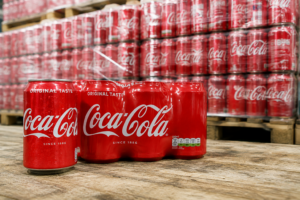
Coca-Cola Wholesale Suppliers Compared: What Should Buyers Evaluate & Buy Coca-Cola in Bulk
Comparing Coca-Cola wholesale suppliers requires more than placing two prices next to each other.
A supplier offering a lower unit price may not necessarily provide the lowest final cost once freight, handling, insurance, taxes, customs, storage, and other expenses are included.
A practical supplier comparison should consider several categories.
Product Availability
Can the supplier provide the Coca-Cola products and package formats you need consistently?
Availability is important because a retailer that regularly runs out of a high-demand product can lose sales.
Ask about current inventory, replenishment schedules, and whether larger quantities can be supplied for repeat orders.
Wholesale Pricing
Ask for pricing based on the quantity you actually intend to purchase.
Wholesale prices can vary according to:
- Order volume
- Product format
- Destination
- Shipping arrangement
- Currency
- Supplier terms
- Market conditions
For this reason, a single advertised price may not represent the final price for every buyer.
Packaging
Packaging affects transportation, warehouse storage, handling, and product presentation.
Ask about:
- Cans or bottles
- Individual unit sizes
- Units per case
- Case construction
- Shrink wrapping
- Palletization
- Shipping protection
A supplier that provides clear packaging information makes it easier for buyers to calculate freight and warehouse requirements.
Distribution Capabilities
International buyers should determine how products are prepared for shipment.
Questions can include:
- Can products be palletized?
- Can mixed orders be arranged?
- What shipping options are available?
- What documents accompany the shipment?
- What are the estimated lead times?
- Which party handles specific logistics responsibilities?
These questions become particularly important when purchasing large quantities for international distribution.
Coca-Cola Wholesale Prices: How Are They Determined?
There is no single universal Coca-Cola wholesale prices.
The amount a buyer pays can depend on several factors.
Quantity
Larger orders may have different commercial terms than smaller orders.
However, buyers should not purchase excessive quantities simply to obtain a lower unit price.
The savings must be compared with inventory carrying costs and the risk of slower stock turnover.
Packaging Format
Different packaging configurations can have different costs.
A buyer should compare the cost per case and the cost per individual unit.
For example:
Wholesale case price ÷ number of sellable units = approximate unit acquisition cost.
This calculation provides a useful starting point when comparing suppliers.
Shipping Distance
Transportation can significantly affect the landed price.
A product purchased at an attractive price may become considerably more expensive after international freight and destination charges.
Order Type
A single-product order, mixed pallet, full pallet, or container shipment may have different logistics costs.
Destination
Import duties, taxes, customs fees, and local delivery expenses can vary by destination.
This is why professional importers should calculate landed cost before deciding which supplier provides the best deal.
How to Calculate Coca-Cola Landed Cost
The landed cost represents the approximate total expense required to get the goods to their intended destination.
A simplified calculation is:
Product cost + freight + insurance + handling + customs duties + taxes + local delivery = estimated landed cost.
The final figure can then be divided by the number of units.
For example, if the complete cost of a shipment is $10,000 and the shipment contains 10,000 sellable units:
$10,000 ÷ 10,000 units = $1.00 estimated landed cost per unit.
This is only an illustrative calculation. Actual costs depend on the transaction, destination, shipping method, taxes, duties, and other expenses.
Calculating landed cost helps importers compare suppliers more accurately.
How to Order Coca-Cola in Bulk
A professional wholesale order usually begins with product identification.
Step 1: Define Your Required Products
Determine exactly what you need.
Specify:
- Product name
- Size
- Packaging format
- Number of units
- Number of cases
- Desired delivery location
Avoid using vague descriptions such as “Coca-Cola drinks” when requesting a quotation.
Specific product information helps suppliers provide more accurate pricing.
Step 2: Estimate Your Required Quantity
Review your sales data.
Consider:
- Average weekly sales
- Average monthly sales
- Seasonal demand
- Existing inventory
- Warehouse capacity
- Expected replenishment time
The order should be large enough to support sales but not so large that products remain in storage unnecessarily.
Step 3: Request a Wholesale Quote
Ask the supplier to provide pricing based on your intended order quantity.
The quotation should clarify:
- Product price
- Quantity
- Packaging
- Shipping terms
- Delivery arrangements
- Payment requirements
- Available documentation
Step 4: Calculate the Landed Cost
Do not evaluate the supplier using the product price alone.
Calculate all expected expenses before confirming the purchase.
Step 5: Confirm Product and Date Information
Before purchasing a large shipment, ask for the relevant production and best-before information for the offered stock.
This is particularly important for international orders where transportation may take significant time.
Step 6: Arrange Shipping
Confirm how the goods will be transported and who is responsible for different stages of the shipment.
Step 7: Prepare Your Warehouse
Make sure there is adequate storage space before the shipment arrives.
This includes appropriate pallet locations, clean storage areas, and an inventory rotation system.
Choosing a Coca-Cola Wholesale Supplier
A good supplier should fit the operational needs of your business.
Instead of choosing based solely on price, evaluate the entire purchasing relationship.
Supplier Reliability
Can the supplier consistently provide products when you need them?
Reliability is particularly important for businesses with established retail customers.
Communication
Can you obtain clear information about pricing, availability, packaging, shipping, and documentation?
Product Selection
A supplier with multiple beverage brands can make procurement easier.
For example, buyers can compare Coca-Cola with Pepsi soft drinks wholesale products.
Order Flexibility
Some buyers may require mixed products rather than large quantities of one SKU.
Ask whether mixed orders, pallet configurations, or different purchasing volumes are available.
Logistics Experience
For international buyers, experience with export beverage shipments can be valuable.
Building a Multi-Brand Beverage Portfolio
Coca-Cola may be a major product, but retailers often benefit from offering alternatives.
Different customers have different brand preferences.
A broader portfolio may include:
- Coca-Cola
- Pepsi
- Sprite
- Fanta
- Mountain Dew
- Other carbonated beverages
Businesses interested in adding lemon-lime soft drinks can explore Sprite wholesale products.
For orange-flavored soft drinks, buyers can review Fanta wholesale options.
For customers seeking another recognizable carbonated beverage category, Mountain Dew wholesale products can be considered.
A diverse beverage portfolio gives retailers more flexibility when responding to customer demand.
Why Packaging Matters in Coca-Cola Wholesale Distribution
Packaging is an important part of wholesale beverage logistics.
Products may be moved several times before reaching consumers.
The supply chain can include:
- Supplier warehouse
- Loading facility
- Transport vehicle
- Port or logistics hub
- Destination warehouse
- Distributor
- Retailer
- Consumer
Every handling stage creates an opportunity for damage.
Strong cases, appropriate palletization, and careful handling can help reduce losses.
Buyers should therefore ask suppliers how products are prepared for large commercial shipments.
Pallet Planning for Wholesale Soft Drinks
Palletization can affect transportation costs and warehouse efficiency.
Before ordering a large quantity, buyers should request pallet information where applicable.
Important details include:
- Cases per pallet
- Pallet dimensions
- Total pallet weight
- Pallet height
- Number of pallets per shipment
- Loading method
This information helps the importer determine whether the shipment fits available warehouse space and transportation equipment.
Container Planning for Coca-Cola Imports
For international importers, container utilization can become an important part of purchasing strategy.
A buyer may need to determine whether an order will be shipped as:
- Less-than-container-load cargo
- Full container load
- Mixed beverage container
- Palletized shipment
The exact capacity depends on product packaging, pallet configuration, container dimensions, loading method, and applicable weight restrictions.
Never estimate container capacity solely from a generic number of cases.
Instead, request a shipment plan based on the exact product configuration.
Coca-Cola Distribution for Retailers
Retail distribution requires consistent inventory management.
A retailer should monitor:
- Current stock
- Daily or weekly sales
- Reorder points
- Incoming deliveries
- Product dates
- Damaged goods
A simple inventory management system can prevent unnecessary stockouts.
When a high-demand beverage reaches a predetermined reorder point, the retailer can initiate the next wholesale order.
Coca-Cola Distribution for Wholesalers
Wholesalers have an additional responsibility: maintaining enough stock to supply their own customers.
A wholesale distributor may supply:
- Independent stores
- Supermarkets
- Restaurants
- Hotels
- Cafés
- Catering businesses
- Regional beverage distributors
The distributor must therefore balance its own inventory with customer demand.
Large quantities can provide better purchasing efficiency, but excessive inventory can tie up working capital.
How to Store Coca-Cola After Wholesale Delivery
Storage should be planned before ordering.
Always follow the specific product’s labeling and manufacturer guidance, but general commercial beverage storage practices can include the following.
Keep Products in a Suitable Environment
The warehouse should be clean, dry, organized, and appropriate for beverage storage.
Avoid Excessive Heat
Soft drinks should be protected from unnecessary exposure to extreme heat.
This is especially important in warehouses and transport environments that can become significantly hotter than the surrounding air.
Avoid Direct Sunlight
Products should be protected from prolonged direct sunlight.
Protect Against Freezing
Extreme cold can damage some beverage packaging, so products should be stored according to the recommended conditions.
Avoid Physical Damage
Cases should be stacked safely and handled carefully.
Overstacking can result in crushed cartons and damaged products.
FIFO and FEFO Inventory Rotation
Inventory rotation is essential for wholesale beverage businesses.
FIFO — First In, First Out — means older inventory is prioritized for sale before newer stock.
FEFO — First Expired, First Out — prioritizes products with the earliest relevant date.
FEFO can be especially useful when different batches arrive with different date codes.
Using an inventory rotation method reduces the chance that older products remain forgotten at the back of the warehouse.
How Long Does Coca-Cola Last?
The precise shelf-life period can vary by product, packaging, market, and labeling.
Therefore, buyers should not rely on a generic shelf-life assumption.
Instead, check the date information printed on the specific products being purchased and request current stock information from the supplier.
For importers, the relevant question is not only:
“How long does the product last?”
It is also:
“How much shelf life will remain when the shipment reaches my warehouse?”
This distinction is important.
A shipment may spend time in order processing, transportation, customs clearance, and warehouse receiving before it reaches the retail distribution stage.
Managing Shelf Life During Wholesale Distribution
A professional distributor should monitor product dates as part of routine inventory management.
Useful practices include:
- Recording delivery dates
- Identifying batches
- Tracking best-before information
- Rotating older stock
- Checking warehouse inventory regularly
- Avoiding unnecessary long-term storage
- Planning promotions around inventory turnover where appropriate
This helps ensure that products move efficiently through the distribution network.
Coca-Cola Wholesale Pricing: Questions to Ask Suppliers
When requesting a quote, buyers should ask targeted questions.
Product Questions
- What Coca-Cola products are available?
- What sizes are offered?
- What are the case quantities?
- What packaging formats are available?
- What date information is available?
Pricing Questions
- What is the wholesale case price?
- Is the price based on a minimum quantity?
- Are volume-based terms available?
- What additional costs should the buyer expect?
Logistics Questions
- Where are the products shipped from?
- What shipping options are available?
- How are cases palletized?
- What documentation is provided?
- What is the estimated lead time?
Commercial Questions
- What payment terms apply?
- Are mixed beverage orders possible?
- How are repeat orders handled?
Clear answers make it easier to compare suppliers.
Comparing Coca-Cola With Other Wholesale Soft Drinks
A retailer may decide that Coca-Cola is one part of a broader beverage assortment.
For example, Pepsi can provide an alternative cola option, while Sprite and Fanta cover different flavor preferences.
Buyers can review Pepsi wholesale soft drinks, Sprite wholesale drinks, and Fanta wholesale soft drinks when developing a multi-brand purchasing strategy.
For a broader selection, businesses can explore the Cariel Soft Drinks LTD wholesale soft drinks range.
Benefits of Buying Multiple Soft Drink Brands
A multi-brand purchasing strategy can provide several commercial advantages.
More Customer Choice
Customers have different preferences. Offering several brands gives retailers more opportunities to meet those preferences.
Better Product Assortment
A balanced portfolio can include cola, orange, lemon-lime, and other carbonated beverage categories.
More Efficient Procurement
If one supplier can provide multiple brands, businesses may be able to simplify purchasing.
Better Distribution Opportunities
Wholesalers can offer a broader catalog to their retail customers.
Common Mistakes When Ordering Coca-Cola in Bulk
Ordering Based Only on Advertised Price
The advertised case price does not necessarily represent the final landed cost.
Ignoring Freight
International freight can materially change the economics of a bulk purchase.
Overestimating Sales
Large quantities should only be ordered when supported by realistic demand projections.
Failing to Check Packaging
Packaging information is essential for transportation and warehouse planning.
Not Checking Date Information
Always establish the date status of the actual stock being offered.
Poor Inventory Rotation
Old inventory can become difficult to sell if it is not rotated properly.
Ignoring Local Import Requirements
Importers should verify all applicable destination-market rules before purchasing.
How Retailers Can Improve Coca-Cola Inventory Turnover
Inventory turnover is one of the most important considerations for beverage retailers.
Retailers can improve inventory management by:
- Monitoring sales regularly
- Setting reorder points
- Tracking stock by SKU
- Rotating older stock
- Reviewing seasonal trends
- Avoiding excessive purchasing
- Maintaining accurate inventory records
The objective is to keep enough product available without creating unnecessary stock.
How Wholesalers Can Improve Distribution Efficiency
Wholesalers can improve operations by grouping products strategically.
For example, a distributor may organize its warehouse by:
- Brand
- Product type
- Package size
- Customer destination
- Date code
Clear organization can reduce picking errors and make order fulfillment faster.
Digital inventory systems can also provide visibility into stock levels and reorder requirements.
Buying Coca-Cola Wholesale for Restaurants and Hotels
Restaurants and hotels may have different requirements from supermarkets.
They may prioritize:
- Consistent supply
- Convenient case sizes
- Fast replenishment
- Reliable delivery
- Product variety
- Predictable purchasing costs
A hospitality business should analyze consumption patterns before committing to a large wholesale order.
For example, beverage demand may increase during tourist seasons, conferences, weddings, holidays, or special events.
Buying Coca-Cola Wholesale for Events
Event companies can experience temporary spikes in demand.
Rather than basing orders on normal weekly sales, event buyers should estimate expected attendance and beverage consumption.
The purchasing calculation should account for:
- Number of guests
- Event duration
- Available beverage alternatives
- Expected consumption
- Existing inventory
- Delivery timing
- Storage before the event
Bulk purchasing can be useful when demand is concentrated into a short period, but products should still be handled and stored appropriately.
Why Supplier Reputation Matters
A supplier relationship can influence the reliability of your entire beverage operation.
A dependable supplier should provide clear information about products and purchasing requirements.
Buyers should pay attention to:
- Accuracy of quotations
- Communication
- Product availability
- Packaging information
- Shipping information
- Documentation
- Responsiveness
A professional purchasing process helps reduce uncertainty when ordering significant quantities.
A Practical Coca-Cola Wholesale Buying Checklist
Before confirming a bulk order, review the following:
- Confirm the exact Coca-Cola product.
- Confirm the package size.
- Confirm units per case.
- Confirm the number of cases.
- Confirm wholesale pricing.
- Calculate landed cost.
- Confirm available stock.
- Check date information.
- Review packaging.
- Confirm pallet details where applicable.
- Confirm shipping arrangements.
- Review destination-market requirements.
- Prepare adequate warehouse space.
- Establish FIFO or FEFO procedures.
- Create a distribution plan.
This simple process can help retailers and distributors make more informed purchasing decisions.
Final Thoughts: How to Buy Coca-Cola in Bulk Successfully
Buying Coca-Cola in bulk can be an effective purchasing strategy for retailers, wholesalers, importers, hospitality businesses, and distributors with consistent beverage demand.
However, successful wholesale purchasing requires careful planning.
The best Coca-Cola wholesale supplier is not necessarily the company offering the lowest advertised case price. Instead, buyers should evaluate the complete commercial proposition, including product availability, packaging, order quantities, supplier communication, logistics, documentation, shelf-life information, and landed cost.
Retailers should purchase quantities that match their sales volume and storage capacity. Wholesalers and importers should pay particular attention to palletization, shipping arrangements, customs requirements, inventory rotation, and distribution planning.
A broader beverage portfolio can also help businesses serve different consumer preferences. Buyers can explore Coca-Cola wholesale products from Cariel Soft Drinks LTD and compare them with Pepsi wholesale soft drinks, Sprite wholesale drinks, Fanta wholesale soft drinks, and Mountain Dew wholesale soft drinks.
For businesses seeking additional wholesale beverage options, the Cariel Soft Drinks LTD soft drinks wholesale and distribution range provides another starting point for researching bulk beverage products.
Ultimately, effective Coca-Cola wholesale purchasing comes down to five fundamentals: the right product, the right quantity, the right supplier, the right landed cost, and the right inventory strategy.
When these factors are considered together, retailers and distributors can build a more reliable beverage supply chain, maintain appropriate stock levels, and make better-informed decisions when ordering Coca-Cola and other popular soft drinks in bulk.
coca cola wholesale suppliers, coca cola distributors, coca cola wholesale prices, coca cola suppliers, coca cola bulk supplier, coca cola wholesale distributor , buy coca cola wholesale, buy coca cola in bulk, coca cola for sale, coca cola bulk prices, coca cola wholesale cases, buy coca cola by pallet, coca cola wholesale online