
Whiskey remains one of the most commercially attractive categories in the global spirits market. From Scotch whisky and Irish whiskey to American bourbon, Tennessee whiskey and premium single malt, wholesalers and distributors can build profitable portfolios by selecting products that match local consumer demand, retail positioning and regulatory requirements. What Whiskey Is Best For Wholesale Distribution USA & Europe
For importers, however, buying whiskey internationally involves much more than finding a low supplier price. A successful wholesale operation requires reliable sourcing, authentic products, correct documentation, suitable packaging, compliant labels, customs clearance, excise-duty planning and the appropriate alcohol permits.
Whether you are looking for Scotch whisky wholesale, bourbon wholesale, Irish whiskey wholesale or premium international spirits, choosing the right supplier can make a major difference to your margins and long-term distribution business.
Cariel Soft Drinks LTD provides an international wholesale platform for buyers looking for branded alcoholic beverages and soft drinks. Buyers can explore the company’s wholesale whiskey supplier and distributor page when developing a commercial whiskey sourcing strategy.
What Whiskey Is Best for Wholesale Distribution?
The best whiskey for wholesale distribution is not necessarily the most expensive or rarest whiskey. For distributors, the strongest products are generally those that combine recognizable branding, consistent consumer demand, suitable wholesale pricing, reliable availability and an attractive resale margin.
A successful wholesale whiskey portfolio may include several categories rather than relying on one product.
1. Scotch whisky
Scotch whisky is one of the most recognized international whisky categories. It includes blended Scotch, single malt Scotch and other styles.
Well-known products can attract established whisky consumers and provide distributors with recognizable brands for liquor stores, restaurants, bars, hotels and duty-free channels.
For premium distribution, products such as Glenfiddich, Macallan and Ardbeg can help create a higher-value portfolio.
Wholesale buyers interested in Ardbeg can explore the Ardbeg whisky wholesale supplier page.
For Glenfiddich sourcing, see the Glenfiddich whisky wholesale distributor page.
For Macallan, buyers can review the Macallan whisky wholesale supplier page.
2. Blended Scotch whisky
Blended Scotch can be particularly useful for mainstream wholesale distribution because it can appeal to a broad customer base.
Brands such as Johnnie Walker and Ballantine’s are widely recognized internationally and can fit supermarkets, liquor stores, bars, restaurants, hotels and general beverage distributors.
Ballantine’s Finest 700ml is one product that wholesalers may consider when building a mainstream Scotch portfolio. Buyers can view the Ballantine’s Finest 700ml wholesale page.
Johnnie Walker Black Label is another recognizable product for distributors targeting customers seeking a premium blended Scotch. See the Johnnie Walker Black Label wholesale supplier page.
3. Irish whiskey
Irish whiskey is another important category for international wholesale distribution.
Products such as Jameson have strong brand recognition and can work across retail and hospitality channels. Larger bottles such as 1-litre formats may be particularly attractive for selected wholesale and travel-retail markets.
Wholesalers can review the Jameson 1L whisky wholesale supplier page when comparing products for their portfolio.
4. Bourbon and American whiskey
American whiskey offers another major wholesale category. Bourbon and Tennessee whiskey are especially recognizable in international markets.
Jack Daniel’s Old No. 7, for example, has significant brand recognition and can be suitable for distributors targeting bars, restaurants, retailers and consumers seeking American whiskey.
See the Jack Daniel’s Old No. 7 wholesale supplier page for sourcing information.
5. Premium whisky and spirits
Premium and luxury products can increase the average value of a distributor’s product portfolio.
However, premium products should be purchased carefully. A distributor needs to confirm authenticity, supply continuity, market demand, packaging condition, tax requirements and resale restrictions before committing significant capital. What Whiskey Is Best For Wholesale Distribution USA & Europe

How Do I Choose the Best Whiskey for Wholesale Distribution?
The best whiskey for wholesale distribution should be evaluated using several commercial factors.
Brand recognition
Recognizable brands can be easier to sell because retailers and consumers already understand the product.
Wholesale price
A low purchase price does not automatically mean a good wholesale deal. Buyers should calculate the complete landed cost.
This may include:
- Product cost
- Freight
- Insurance
- Customs duties
- Excise taxes
- Import fees
- Warehouse charges
- Port charges
- Customs brokerage
- Local distribution costs
- Currency conversion costs
- Compliance and labeling costs
The correct comparison is therefore the landed cost per bottle or case, not simply the supplier’s quoted unit price.
Bottle size
Bottle size affects both retail positioning and logistics.
Common whiskey formats include 700ml, 750ml and 1-litre bottles. The appropriate format depends on the target country and sales channel.
Case configuration
Ask suppliers for the number of bottles per case, case dimensions, gross weight, pallet configuration and pallet quantity.
These details are essential when calculating shipping costs.
Shelf positioning
A distributor may benefit from combining mainstream and premium whiskey.
For example:
- Mainstream blended Scotch
- Premium blended Scotch
- Irish whiskey
- American whiskey
- Single malt Scotch
- Luxury whisky
This creates multiple price points for different customers.
How Do I Find Whiskey Suppliers for Import into the USA?
Finding a whiskey supplier for the United States requires more than searching for “cheap whiskey wholesale.”
The importer should first identify whether the supplier is an established manufacturer, authorized distributor, international wholesaler or trading company.
A supplier should be able to provide appropriate commercial documentation and information about the products being offered.
For U.S. commercial imports, TTB states that businesses seeking to import distilled spirits must obtain a Federal Basic Importer’s Permit. TTB also explains that importers must comply with labeling, registration, tax and other requirements.
A practical supplier verification process should include:
- Confirm the company’s legal business name.
- Confirm the physical business address.
- Request product specifications.
- Request current product photographs.
- Confirm bottle size and case quantity.
- Request country of origin.
- Confirm available stock.
- Request commercial invoice information.
- Confirm export documentation.
- Confirm whether the supplier can provide certificates required for the destination market.
- Check whether the product label is suitable for the destination country.
- Calculate landed cost before placing the order.
For U.S. imports, TTB specifically notes that an importer must obtain a COLA for each unique product/label covered by the applicable requirements.
This makes regulatory planning an essential part of supplier selection.
How Do I Find Whiskey Suppliers for Import into Canada?
Canada has its own alcohol-import structure, and importers need to understand both federal customs requirements and provincial or territorial liquor-control systems.
The Canada Border Services Agency explains that commercial importation of intoxicating liquor is subject to specific rules covering who can import and transport liquor, reporting, warehouses and related procedures.
Provincial and territorial liquor authorities are particularly important because alcoholic beverage distribution is regulated differently across Canadian jurisdictions.
Therefore, a Canadian importer should identify:
- Destination province
- Provincial liquor authority
- Import channel
- Product registration requirements
- Wholesale requirements
- Customs requirements
- Excise and other applicable taxes
- Label requirements
- Warehouse requirements
- Distribution arrangements
Canada’s customs guidance also confirms that certain alcohol products are subject to excise duty and that importers must determine tariff classification and customs value.
A professional whiskey supplier should be able to provide the information needed by the Canadian importer and its customs broker.
How Do I Find Whiskey Suppliers for Import into Europe?
Europe is a major whisky market, but “Europe” should not be treated as one simple licensing jurisdiction.
The European Union has common customs and excise frameworks, while individual member states can have additional national requirements.
An importer bringing whiskey into the EU generally needs to consider:
- EORI registration
- Customs classification
- Customs declarations
- Excise-duty requirements
- VAT
- Alcohol labeling
- Product documentation
- Warehousing
- Excise movement procedures
- Destination-country rules
The European Commission states that an EORI number is mandatory for customs clearance operations in the EU customs territory, including imports, exports and transit.
Excise products such as alcohol may also move under the EU’s Excise Movement and Control System, known as EMCS. The system records and monitors movements of excise goods and uses electronic administrative documents for relevant movements.
For this reason, European importers should work with customs and excise specialists who understand the specific destination country.
How Do I Find Whiskey Suppliers for Import into France?
France is one of Europe’s important alcohol markets and has a sophisticated tax, customs and distribution system.
A French importer should verify:
- Company registration
- EORI
- Customs procedure
- Excise status
- VAT treatment
- Alcohol labeling
- Product classification
- Duty requirements
- Warehouse arrangements
- Distribution permissions
If whiskey is imported from outside the EU, the importer should also determine whether the shipment will be entered for free circulation immediately or moved under an applicable customs/excise arrangement.
The supplier should provide accurate commercial documentation, including product description, quantity, unit price, country of origin and packaging information.
Importers should not rely solely on supplier claims about French compliance. Product labels and tax treatment should be checked before commercial shipment.
How Do I Find Whiskey Suppliers for Import into Germany?
Germany is another major European market for spirits.
German importers should consider customs, EORI, excise duties, VAT, product labeling and the intended distribution channel.
Germany’s customs administration explains that businesses participating in duty-suspension procedures for excise goods may require appropriate authorization and excise identification.
German customs also explains that when excise goods are imported and immediately placed into a duty-suspension procedure, specific authorization can be required for onward movement under that procedure.
Therefore, importers should determine their intended customs and excise procedure before ordering.
Do I Need a License to Import Whiskey into the USA?
Yes, commercial whiskey importing into the United States is regulated.
TTB states that persons seeking to engage in the business of importing distilled spirits must apply for a Federal Basic Importer’s Permit. TTB also states that a U.S. business office must be maintained and that an importer unable to conduct business in the United States may need to work through an existing licensed U.S. importer.
Importers may also need:
- TTB importer permit
- Alcohol dealer registration
- EIN
- Product label approval
- COLA
- Customs entry
- Federal excise-tax compliance
- State alcohol licenses
- Local compliance
- Appropriate records
TTB also makes clear that state and local authorities can impose additional requirements.
A U.S. importer should therefore evaluate both federal and state requirements before importing.
Do I Need a License to Import Whiskey into Canada?
Canada does not operate exactly like the U.S. federal TTB system.
Commercial liquor importation is closely connected with provincial and territorial liquor authorities. The importer should determine the rules of the province where the whiskey will be imported and distributed.
The CBSA identifies specific procedures for commercial importation of intoxicating liquor, while Canadian authorities also indicate that alcoholic beverages are regulated under the Importation of Intoxicating Liquors Act.
Consequently, Canadian importers should not assume that simply having a general business registration is enough to distribute whiskey commercially.
The importer should confirm requirements with:
- CBSA
- Canada Revenue Agency where relevant
- Provincial liquor authority
- Customs broker
- Relevant food/product authorities
- Warehouse and distribution partners
Do I Need a License to Import Whiskey into Europe?
There is no single EU-wide “whiskey importer license” that automatically replaces all national requirements.
The precise requirements depend on:
- Whether the goods originate inside or outside the EU
- Importing member state
- Excise arrangement
- Whether the importer owns an excise warehouse
- Whether duty is suspended
- Whether goods are released for consumption
- Distribution model
An EORI is required for EU customs operations.
Excise goods can also be subject to EMCS procedures.
Therefore, an importer should establish the appropriate customs and excise status before purchasing a commercial shipment.
Do I Need a License to Import Whiskey into France?
French importers should verify national customs and alcohol requirements in addition to EU customs and excise rules.
If whiskey is imported from outside the EU, the business should establish:
- EORI status
- Customs procedure
- Excise procedure
- VAT treatment
- Product classification
- Labeling requirements
- Storage arrangements
- Distribution requirements
For larger shipments, it is advisable to use a customs broker and tax/excise specialist familiar with alcoholic beverages.
Do I Need a License to Import Whiskey into Germany?
Commercial whiskey importation into Germany requires appropriate customs and excise compliance.
An importer should establish its EORI status and determine how the whiskey will be entered into Germany.
Where goods are moved under duty suspension, German customs requirements concerning authorization and excise identification can apply.
Because the exact procedure depends on the business model, importers should confirm their status with German customs before shipment.
Where to Buy Whiskey Wholesale Internationally
International whiskey buyers have several sourcing options.
Direct from distilleries
Buying directly from a distillery can be attractive for large-volume buyers, but major brands may have established distribution networks and minimum order requirements.
Authorized distributors
Authorized distributors can offer established products while providing documentation and logistics support.
International beverage wholesalers
International wholesalers can be useful for importers who want to consolidate multiple brands into one shipment.
This can be particularly attractive for buyers who want to source Scotch, Irish whiskey, bourbon and other spirits within the same purchasing program.
Export trading companies
International trading companies may source branded beverages for overseas markets.
However, buyers should conduct due diligence and verify authenticity, commercial documentation and product availability.
Online wholesale supplier platforms
Online supplier pages can make it easier to identify available products and request quotations.
Cariel Soft Drinks LTD provides a dedicated buy whiskey wholesale online supplier and distributor page for buyers researching international whiskey sourcing.
Best Whiskey Suppliers for Wholesale Importers and Distributors
The best whiskey supplier is the one that combines product authenticity, competitive pricing, reliable availability, export capability and documentation.
Instead of selecting a supplier solely because it offers the cheapest price, importers should evaluate the supplier using a structured checklist.
Supplier verification checklist
Ask the supplier:
Where is the product sourced?
The supplier should clearly identify the country of origin.
Is the product genuine?
For branded whiskey, authenticity is essential.
What bottle sizes are available?
Ask whether 700ml, 750ml or 1L formats are available.
How many bottles are in a case?
This affects your landed cost.
How many cases are on a pallet?
This affects warehouse planning and freight calculations.
What is the minimum order quantity?
Some suppliers may accept mixed cases or mixed pallets, while others may require larger quantities.
What documents are available?
Depending on the destination, importers may require commercial invoices, packing lists, certificates, origin documentation, age/origin certificates or other regulatory documents.
For U.S. imports, TTB notes that certain imported distilled spirits, including Scotch, Irish and Canadian whiskeys, can require certificates of age and origin.
What is the shelf life?
Many properly stored distilled whiskies are not subject to the same short shelf-life concerns as beer or soft drinks, but importers should nevertheless confirm the product’s labeling and storage requirements.
What is the packaging condition?
Premium bottles require careful handling because damaged cartons, broken seals or scratched labels can reduce resale value.
Whiskey Brands for a Wholesale Portfolio
A diversified portfolio can include both mainstream and premium brands.
Ballantine’s Finest
Ballantine’s Finest can be considered for mainstream Scotch distribution because of its recognizable brand positioning.
Review the Ballantine’s Finest 700ml wholesale page.
Glenfiddich
Glenfiddich is associated with single malt Scotch and can be positioned toward customers seeking premium whisky.
See the Glenfiddich wholesale supplier page.
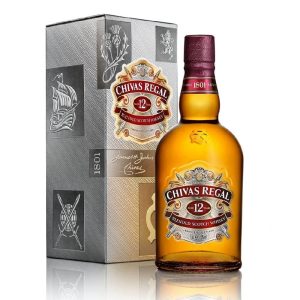
Chivas
Chivas is a recognizable blended Scotch brand suitable for premium mainstream distribution.
For sourcing information, visit the Chivas 750ml wholesale page.
Johnnie Walker Black Label
Johnnie Walker Black Label provides another premium blended Scotch option.
See the Johnnie Walker Black Label wholesale page.
Jameson
Jameson is a well-known Irish whiskey and can help a distributor diversify beyond Scotch.
See the Jameson 1L wholesale page.
Jack Daniel’s Old No. 7
Jack Daniel’s Old No. 7 is an established American whiskey option for distributors seeking international brand recognition.
See the Jack Daniel’s Old No. 7 wholesale page.
Ardbeg
Ardbeg can appeal to consumers looking for distinctive premium single malt Scotch.
Visit the Ardbeg wholesale supplier page.
Macallan
Macallan occupies a premium segment and may be appropriate for luxury-focused liquor retailers, hospitality businesses and specialist whisky distributors.
See the Macallan wholesale supplier page.
Hennessy
Although Hennessy is Cognac rather than technically whiskey, it can be relevant to distributors building a broader premium spirits portfolio.
See the Hennessy wholesale supplier page.
How to Calculate the Wholesale Cost of Imported Whiskey
A supplier’s quoted price should never be treated as the final cost.
A simple landed-cost calculation can be structured as:
Landed Cost = Product Cost + Freight + Insurance + Customs Charges + Excise + VAT/Taxes + Port Charges + Brokerage + Local Logistics
For example, if a distributor purchases 1,000 bottles, the business should calculate the complete cost per bottle after all applicable expenses.
The importer can then determine:
Wholesale Margin = Selling Price − Landed Cost
This should be compared against the distributor’s operating expenses.
Additional costs can include:
- Warehouse rent
- Staff
- Insurance
- Financing
- Damaged products
- Sales commissions
- Local delivery
- Marketing
- Regulatory compliance
- Currency fluctuations
A product that appears inexpensive at origin may become expensive after taxes, freight and compliance costs.
How Many Whiskey Bottles Should I Order?
The right order size depends on sales velocity and working capital.
New distributors should generally avoid committing excessive capital to products they have not tested.
A sensible strategy can involve:
Stage 1: Sample and verify the supplier.
Stage 2: Place a small commercial order where permitted.
Stage 3: Measure customer demand.
Stage 4: Expand to pallet quantities.
Stage 5: Negotiate container or recurring supply programs once demand is proven.
For established distributors, larger orders may improve unit economics and reduce freight costs per bottle.
What Documents Should a Whiskey Importer Request?
The exact documentation depends on the destination market and shipment structure, but a professional buyer may request:
- Commercial invoice
- Packing list
- Bill of lading
- Certificate of origin where required
- Product specification
- Bottle and case details
- Alcohol percentage
- Brand information
- Batch information where applicable
- Age/origin documentation where required
- Export documents
- Insurance documents
- Customs information
- Label documentation
For U.S. whiskey imports, the TTB requirements can include specific certificates of age and origin depending on the type and origin of the spirit.
How to Avoid Fake Whiskey Wholesale Suppliers
Counterfeit alcohol is a major risk when buying branded spirits from unfamiliar international suppliers.
Warning signs include:
- Prices dramatically below market levels
- No physical company address
- Refusal to provide commercial documents
- Unusual payment requests
- Poor-quality product photographs
- Inconsistent bottle descriptions
- No traceable business identity
- Pressure to make immediate payment
- No export history
- Refusal to provide product documentation
Buyers should conduct due diligence before transferring funds.
For expensive premium whisky, verification is particularly important.
Should I Buy Premium or Mainstream Whiskey for Wholesale?
For most distributors, the answer is both.
A balanced portfolio can combine:
Mainstream products: high-volume products designed for broad retail demand.
Premium products: higher-value products designed for customers willing to pay more.
Luxury products: limited-volume products intended for specialist buyers and premium channels.
This approach can help reduce dependence on one customer segment.
Whiskey Wholesale Distribution in the USA
The United States is a major market for spirits, but regulatory requirements vary between federal and state levels.
A commercial importer should first establish its TTB status and then investigate the requirements of the states where the product will be distributed.
TTB specifically states that businesses importing alcohol must obtain the appropriate federal permit, while state and local requirements also apply.
A distributor should therefore distinguish between:
- Federal import authorization
- State wholesaler authorization
- State distribution requirements
- Retail licensing
- Warehouse requirements
- Label approval
- Tax requirements
Whiskey Wholesale Distribution in Canada
Canadian distribution requires careful attention to provincial liquor systems.
An importer should decide which province or territory will receive the product before developing its distribution plan.
The commercial supply chain may involve:
Manufacturer → International supplier → Canadian importer → Provincial liquor system/distributor → Retailer or hospitality customer
The exact structure varies according to the market.
Whiskey Wholesale Distribution in Europe
European whiskey distribution benefits from a strong internal market but requires careful customs and excise planning for products entering from outside the EU.
Importers should establish:
- EORI
- Customs classification
- Excise status
- VAT treatment
- EMCS requirements
- Warehouse arrangements
- Destination-market labeling
The European Commission confirms that EORI is required for EU customs operations.
Frequently Asked Questions About Whiskey Wholesale
What whiskey is best for wholesale distribution?
The best whiskey depends on the target market, but a strong wholesale portfolio generally combines recognizable mainstream brands with premium and specialist products. Scotch, Irish whiskey, bourbon and Tennessee whiskey can all have a role in an international portfolio.
What is the best whiskey to import into the USA?
There is no single best product for every importer. Products with strong brand recognition, suitable pricing and proven consumer demand may be attractive, but U.S. importers must also consider TTB requirements, state laws, labeling and taxes.
Do I need a license to import whiskey into the USA?
Yes. Commercial importers of distilled spirits generally need a TTB Federal Basic Importer’s Permit before beginning business. State and local requirements may also apply.
Do whiskey imports into the USA require label approval?
Applicable imported distilled spirits generally require a TTB Certificate of Label Approval for each unique product/label.
Do Scotch and Irish whiskey require special documentation in the USA?
Certain Scotch, Irish and Canadian whiskeys require certificates of age and origin under U.S. rules.
Can I buy whiskey wholesale internationally?
Yes. Importers can source through distilleries, authorized distributors, international wholesalers and beverage trading companies. Buyers should verify authenticity, documentation, pricing and export capability before purchasing.
What is the best bottle size for wholesale whiskey?
700ml, 750ml and 1-litre formats are common commercial formats, but the best option depends on the destination market and distribution channel.
Is single malt better for wholesale than blended Scotch?
Not necessarily. Blended Scotch may provide broader mainstream appeal, while single malt can offer stronger positioning in premium and specialist markets.
Is Jack Daniel’s good for wholesale distribution?
Jack Daniel’s can be an attractive product for distributors seeking a recognizable American whiskey brand. Market demand, supplier availability and destination-market compliance should be evaluated before ordering.
Is Jameson good for wholesale distribution?
Jameson can be useful for distributors seeking an internationally recognized Irish whiskey product. The appropriate bottle size and landed cost should be evaluated for the destination market.
Is Glenfiddich good for wholesale?
Glenfiddich can be positioned as a premium single malt product. It may complement a portfolio containing mainstream blended Scotch and other premium spirits.
Is Macallan suitable for wholesale distribution?
Macallan can be suitable for premium and luxury-focused distribution, but buyers should pay particular attention to authenticity, supplier credibility and pricing.
Can I import whiskey into Germany?
Commercial imports into Germany require customs and excise compliance. Importers should establish their EORI status and determine the appropriate customs and excise procedure before shipment.
Can I import whiskey into France?
Yes, subject to applicable customs, excise, tax, labeling and distribution requirements. Importers should verify the specific French and EU requirements for their shipment.
Can I import whiskey into Canada?
Commercial whiskey imports are subject to Canadian federal and provincial/territorial rules. Importers should confirm the requirements applicable to the province or territory where the product will enter and be distributed.
What should I ask a whiskey supplier before buying?
Ask about origin, authenticity, bottle size, case quantity, pallet configuration, minimum order quantity, available stock, export documentation, product specifications, pricing, shipping terms and payment terms.
How do I compare two whiskey suppliers?
Compare their landed cost, product authenticity, availability, documentation, packaging, minimum order quantity, shipping terms, payment conditions and reputation rather than comparing only the quoted bottle price.
Can I mix different whiskey brands in one wholesale order?
Some international wholesalers may allow mixed orders, while others require minimum quantities for each SKU. Ask the supplier about mixed cases, mixed pallets and mixed-container programs.
Why Choose Cariel Soft Drinks LTD for International Whiskey Sourcing?
For international importers, the objective should be to build a reliable supply chain rather than simply locate the lowest advertised price.
Cariel Soft Drinks LTD provides buyers with access to a portfolio of branded beverage products and dedicated product pages for wholesale sourcing.
Importers and distributors can start with the company’s main website and explore the dedicated wholesale whiskey supplier and distributor page.
Buyers looking for individual products can also review:
- Ardbeg whisky wholesale suppliers
- Ballantine’s Finest 700ml wholesale suppliers
- Glenfiddich whisky wholesale suppliers
- Chivas 750ml whisky wholesale suppliers
- Hennessy wholesale suppliers
- Jack Daniel’s Old No. 7 wholesale suppliers
- Jameson 1L whisky wholesale suppliers
- Johnnie Walker Black Label wholesale suppliers
- Macallan whisky wholesale suppliers
Final Guide for Whiskey Importers and Distributors
The question “What whiskey is best for wholesale distribution?” cannot be answered by choosing one brand for every market.
The right product depends on the target customer, country, retail channel, purchase price, landed cost, taxes, regulatory requirements and expected sales volume.
For mainstream distribution, recognizable brands can provide strong commercial advantages. For premium distribution, single malt and luxury whisky can help increase average order value. For diversified portfolios, combining Scotch, Irish whiskey and American whiskey can provide access to multiple consumer segments.
The most important step is to select a reliable supplier and complete regulatory checks before placing a commercial order.
U.S. importers should begin with TTB requirements and then investigate state and local regulations.
Canadian importers should evaluate federal customs requirements together with provincial or territorial liquor regulations.
European importers should establish EORI, customs and excise requirements, including applicable EMCS procedures.
Germany and France require additional attention to national implementation of EU customs and excise rules.
Ultimately, the strongest whiskey wholesale strategy combines reliable suppliers, authentic branded products, competitive landed costs, compliant documentation, appropriate licensing and consistent availability.
For international buyers searching for whiskey suppliers, wholesalers and distributors, Cariel Soft Drinks LTD can be a starting point for researching available products and developing a commercial sourcing program.